


How Homeschooling Supports Family Health
What does a French school day look like? This includes a slower pace at life, more time outdoors, more creativity, more time for much more tasty and nutritious meals at breakfast, lunch and dinner. And this, I claim, is far better for my family’s overall health.
I came to the United States 14 years ago. I was raised in France, and schooled in the public school system. Needless to say, I did not expect choosing for my children an instruction system that appears to be in total contradiction with the one I received. Au contraire, it is not ! In the U.S., homeschooling supports family Health because is the best way to share with my kids the way I was raised and experienced daily life growing up.
Much of the talk when it comes to ideal lifestyle often compares the U.S. with Europe, especially France or Norway. So let me make the case that homeschooling in the U.S. is in a way the closest lifestyle to a French lifestyle. A major contrast to Europe are distances from walkable city centers.
Affiliate Disclaimer
This blog contains affiliate links, including Amazon links.
Using this links comes at not cost to you, but supports my work in the the making of this website.
As a promise to you, I only promote products I own or would purchase myself, and trust.
Thank you in advance for your support!
When I say “school”, I am talking about the school of the 1980s-1990s as it was organized. Not in its ideological and teaching approaches, which tend to change with every administration. Rather, I am referring to the way it was and still is organized, the timeline and the cultural and social organizational environment. What I am practicing from home today looks more like my school rhythm in France than what a normal school life looks like in America today.
What does a French school day look like? This includes a slower pace at life: more time outdoors, more creativity. And mostly, more time for much more tasty and nutritious meals at breakfast, lunch and dinner. Therefore, homeschooling supports family health, at least in my case.

Want more recipe like this and health tips in your email box? Become part of the Steamed Cuisine Community!
A lot of time outside
Homeschooling supports family health by providing more time outdoors. Time outside supports many aspects of health, including mental health (lower stress), immunity ( vitamin D) and fitness ! Want to get the research supporting that fact and more, check out Jenny Yurich fantastic book 1000 Hours Outside and her podcast of the same name. The more time outdoors, the more kids move, but also their moms. Homeschooling fosters a lot of time outside and hence mental health.
It used to be the case that kids would get more recess at school. They would play hours daily with other kids in the neighborhood. With raising costs of healthcare, liability culture, AC and screens, people spend much more time inside these days. So our kids have less social life outdoors in their neighborhood. That’s in the U.S., but not everywhere.
More Recess
In Europe, kids get a lot more recess than their American counterparts. In primary, middle and high school in France in the 1990s, I had 20 minutes recess every two hours, at least 10 minutes every hour. On top of that, I had 90 min lunch recess!!
Although we started school at 8:30am and ended school at 4:30pm, recess made a long day at school much less stressful. We also could run outside, even in the rain, whatever the weather. When I heard of the amount of recess American school kids get in primary school, it felt…. very unreasonable. Even as a girl, I needed way more time outdoors so I could focus in class. Boys need even more ! No wonder they get diagnosed with ADHD! My kids don’t always spend as much time outside as I’d like. However, they do get more than what an American school can provide. Outdoors recess time was probably my reason #3 for homeschooling, right after multilingualism and nutrition.
Creativity
More time outside means more creativity, receptivity to nature, spontaneous ideas, more surviving skills . Growing up, I did have this opportunity: building cabins, using nature to build toys, making bouquets, observing insects, foraging… Even observing the city gutters, street lamps or feeding dirty pigeons in the city was a fun past time. But it took lots of leisure time and some amount of boredom, which having a screen at hand would have filled up and dried out.
Less screen time
It goes without saying that a kid raised in the 1980-90s didn’t spend nearly as much time watching a screen as kids do today. I got even less. In my family, TV was only a week end event. My parents were prioritizing and modeling creativity and reading. And looking back, I was much more creative then than now. And I am a BUSY mom that does not have time for TV until bed time…
Fact its, TV, like podcasts and audiobooks to some degree, don’t allow their audience to stop, take a step back and think as easily as with a book. Moreover, readers learn more including vocabulary, spelling, and all types of contents. More that they possibly can using screen-based “smart” curricula. Being off screen gets us more receptive to people surrounding us and makes us more social, civil.
I do think the “old way”, i.e. the screen-less ways humans have been experiencing for millennia, is better for everyone’s mental health. Kids’ “TV break” never help me as much as I’d hoped. I get more whining and fighting over TV than I get on days TV is off. If my kids don’t expect TV or video games as time fillers, kids naturally find something to do. We do a bit more TV at our home than I did in my childhood. But I try to use it wisely, for example as an avenue for foreign language immersion. But we don’t turn on the TV every single day.

Mental health
It is an obvious statement that more screen-less outside recess is good for mental health. Just check Johnathan Haidt’s Anxious Generation and you will have all the arguments you need. Just the possibility of online bullying is enough to make any parent think twice. In person bullying was bad enough for me. But outdoor time is much more relaxing for everyone. Jenny Yurich from 1000 hours outside explains it so well on her podcast: noise is instantly soaked up by nature. Spending time outside with your kids is calming for both parents and children. And as a bonus, we realized very quickly that less time playing with their toys inside meant the kids spent less time clearing them up! Nature is appeasing. Fact: My kids forget 95% of their toys when we spend time a few days in the countryside.
More time for read alouds
Homeschooling supports family health by providing bonding time and supporting healthy relationships. Both the French lifestyle and homeschooling make more time for read alouds. It is also more compatible with bilingualism. However, I will leave bilingualism to the side for now, and save it for another post!


Sit Down Lunch time is Perfect for language building through reading
Story time gets complicated
My oldest child is the one that benefitted the most for story time read alouds. He was always loving books and would sit through short books from 15 months onward. But his sisters weren’t interested in books until three or four years old. Sadly, the more kids I had – I have six now – the less I had time for reading aloud. I now have to make sure that kids finishing school late do get enough time outside! The balancing game between academics, outdoor time and activities gets more complicated.
Lunch read alouds
Sit down lunch is great for family sharing, but it is sometimes chaotic.
So when do I make time for read alouds even when I don’t have 5 extra minutes for a book... at lunch and dinner time! With sit down breakfasts, lunch and dinner, this mom who used to be frustrated at how long kids would spend eating their food found a good way to use her time once she is done with her own food: reading short stories !
Rather than pressing kids to finish eating, I use some of our lunch times to get some family bonding time that does not feel like school, and they get their story time from Mom. So if Daddy wants story time before bed, he has his own bonding time too. Of course, you only need to listen to the Read Aloud Revival podcast or read Sarah Mackensie’s Read Aloud Family to learn how reading books aloud strengthens family relationships and how to raise strong readers and writers at all ages. But that also helped me deal with frustration over lunch time chaos in a very productive way, an appeasing way, and in a way that also bolsters multilingualism.
Homeschooling Is French lifestyle Compatible !
What is the French lifestyle I am referring to ? First, the French lifestyle is generally a slower-paced life which means less stressful – at least for kids – than in the US. The school rhythm gives kids plenty of recess time to unleash their energy. Also, the French (also a general trend but not exclusive) pride themselves in passing down tastes and cooking skills to their kids. For example: my French homeschool curriculum does include a cooking class in second grade! Finally the French lifestyle is more health compatible because it transmits a culinary tradition that is more quality focused than the standard American diet.
Slower life and school rhythm
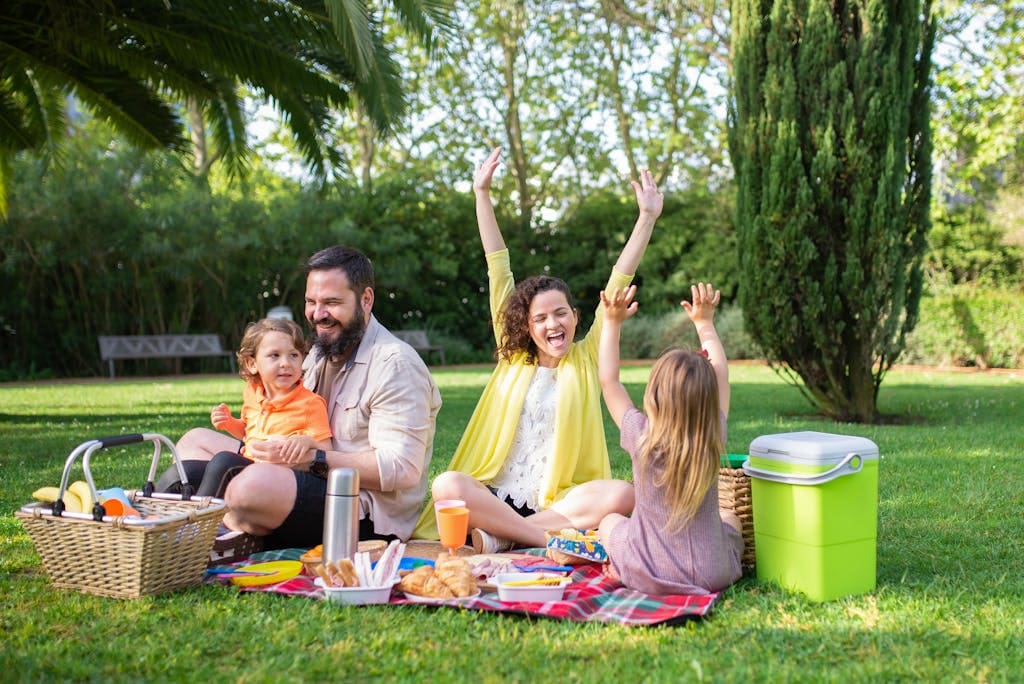
Growing up, my school was a 20 min walk away from my high school ( 5 minutes in primary school). With 90 min lunchtime recess ( on top of in-between-classes recess), I could eat home. And I did ! I got to eat homemade breakfast, lunch and dinner every day of the week and week ends. My American husband, who was homeschooled, pretty much enjoyed that same privilege for a long time. A slower life pace made life more relaxing, fostering closeness as a family. That weighed heavily in my decision to homeschool. I started homeschooling preschool during COVID and enjoyed the slow life and school rhythm. That has not changed since.
Sit down dinner culture
Of course, not all French people lead exactly the same lifestyle. For one, not all moms of my parent’s generation stayed home. My mom was still an exception. But the proximity to school and her presence at lunch time made it possible to enjoy a homemade lunch and dinner every day. Not that she spent hours making it. My mother’s cooking style was also very healthy and quick, simple and tasty. Steam cooking was in my family culture early on and and contributed to the ability to eat lunch at home. Lunch Home was beloved and incomparable to school cafeteria food. It spared me from many teenage issues like acne ! Also, now that my kids’ extracurricular activities are starting to take more time in the evening, sit down lunch ensures that we have some family bonding time every day that isn’t school.
taste and skill transmission
Lunchtime at home also means taste and skill transmission: As I often include my kids in meal making – especially the ones too young to have school – I make them taste the food and teach them to participate in food prep, press machine buttons, cut some veggies, mix cakes when they are strong enough, etc. Although my cooking style is not exclusively French, they do get through me a love for strong tastes and few, good ingredients that is prevalent in French culinary culture.

A culinary tradition focused on ingredient quality and natural tastes
French cuisine naturally focuses on natural ingredients and quality ingredients, natural tastes and great variation in meals. If you need to know anything about French cooking, remember that the best meals are made of a few good ingredients. Wether you love animal foods, are a vegetarian or even vegan, it does not matter, these days the French culinary culture can accommodate it all.
Traditional French cuisine is very diverse. Regions all have their specialties (some include more fish, some more meat and dairy, and some are more Mediterranean and focused on fish and olive oil ). You probably know a few signature dishes, like quiche and beef bourguignon, or ratatouille, all from a different region of France ! Such traditions help raising kids with a love for diversity in their nutrition. It also works for me, because I love to try new things and improvising. I use my country’s culture to impart to my kids a love for variation and curiosity for what they eat !
Also, traditional French cuisine naturally includes fermented foods ( ex: we are very well known for wine and sourdough bread). Although modern manufacturing put many traditional techniques on the back burner, fermentation is coming back and people love it!
The French don’t outsource cooking.
If many families embrace modern convenience, most people enjoy cooking homemade meals at least a few times per week. The love of communal time around meals and snacks, wether with families, friends or neighbors, keeps cooking skills alive. The French culinary tradition commands that “if you want it done right, do it yourself”, and that includes food. We don’t tend to outsource cooking. Granted, the French tend to go to the restaurant more often than Americans (fast foods chains are not considered “restaurants” for most people), but that’s also because quality restaurants are much more affordable in Europe.


Kids participating in making and tasting!
At no time was the “do it yourself to get it done right” command more urgent than now: We know manufactured foods are full of chemicals, seed oils, preservatives, low quality, old ingredients. Add to that high efficiency cooking methods that kill most existing nutrients. Finally, do you really trust the database or computer generated ingredients info on packaging? Meanwhile, a few little principles on home cooking can make a delicious, simple meal, quick and much tastier than anything you can buy in packaged foods. Not to mention healthier.
How does steaming reinforce homeschooling and health
Steaming is not traditionally French, it’s inspired from Asian and Middle Eastern cuisine ( Moroccan) , but the French like to adopt the best of other countries’ culinary traditions. This what an engineer and friend of my father did over 30 years ago when he took the principles of Asian steamers and Middle eastern couscous makers to design a health preserving and enhancing food steamer cooking food at 95°C i.e. 202°F.
Nutrient dense, tasty and colorful
Fact is, cooking at 95° kills less vitamins than boiling. I mean gentle steaming, i.e. not pressure cooking, cooks gently, and noes not rise to 220-250°F (104-121°C) which makes food quality preservation much more difficult, especially without careful watching !
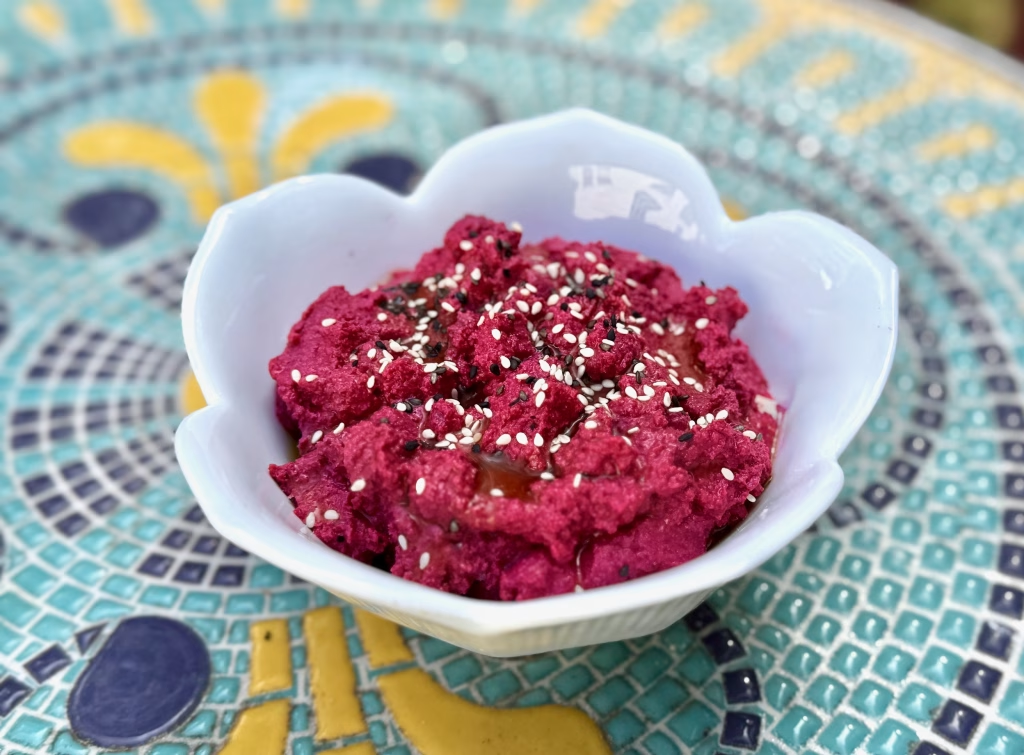
Second, steam cooking is hot enough to cook while penetrating foods and respecting their “organoleptic” properties i.e. while preserving rather than transforming or damaging natural tastes, textures and colors. And we all know how kids are sensitive to textures and colors ! Read More on why Gentle Steam cooking is the healthiest cooking method .

Quick !
Wether you want to cook fish and meat in the steamer or not, virtually everything else except pasta can be cooked in a steamer and quite safely: vegetables, fruits, grains, legumes, fish, even cakes and breads ! On average, with a little preplanning, my lunch can be made in 30min to an hour. If I have a grain ready ( quinoa, rice, buckwheat, amaranth, couscous), 30 minutes suffice to have lunch made. I take a bit more time at dinner based on volume ( we are a large family! )
Our lunches typically include one course of protein + large veggies portion + one portion grain, and kids can get a second serving if they need. Dessert is a fruit. Kids snack on carrots and cucumber shortly before lunch. Dinners are similar, but usually less rushed, so the recipes I use are a bit more involved. But as a rule, I try to not go beyond one hour all in, and I try to include kids in more involved recipes. The results is a meal with veggies having strong, vibrant colors, crunchy textures, natural, unaltered tastes combined and enhanced with the help of light, simple dressings.
quick, Simple cooking fosters healthy cooking
Since my cooking method makes easy, quick meals, I am less likely to give my kids peanut butter and jelly sandwiches, or other sandwich lunch. I’m more willing to make a fresh lunch while we wrap up some work together. And the kids love it: it is their midday break. Every time we make a sandwich, the response I get the next day if I jokingly ask them if they want another sandwich lunch is not a happy one… My children truly feel French in the way they are eating.
Of course, which item you use to steam your food will decide if you want to adopt it as your cooking method. To that end, I drafted an article on the best food steamers out there early 2025 on how to choose a food steamer. In that article, I specified my criteria: manufacturing solidity and the capacity to support nutritional quality of your meals. I also rated the best ones out there. The one I use daily, even on camping trips, is the French Vitaliseur de Marion Kaplan.
Conclusion
If you are wondering why a French immigrant to the U.S. bought into homeschooling, don’t think it’s only about my freedom to school my kids in French – although that’s the biggest reason. It’s also about our freedom to experience the closest possible version of a French lifestyle, and to teach skills like loving the outdoors, cooking, and loving all kind of crafts, skills that tend to get lost in the digital age. This is nothing ideological, it is a teaching strategy, the choice of an atmosphere. My children aren’t isolated from tech, but it is introduced at a slower pace. I do know tech will be easy and fast to learn for them. Perhaps too fast…
Not all French in America make that choice, and who knows, I may be the only one! Why? At first glance, homeschooling is very much the opposite of French culture of school instruction. Moreover, French people living in the US are either immigrants or expats. Expats are often here for a few years and chose to school their kids in the US system for them to learn English and experience the American way of life. In our case, my husband is American, and I became an American after I immigrated because of him. My kids are born here, live here, and are perfectly bicultural, learn both history, both geography, etc. Homeschooling is just a different strategy to go about learning two different cultures, two spoken and written languages, and to keep their health and mine as vibrant as possible. And after 5 years, I am here to report that we are all very satisfied with the adventure !


